Entropion, Ectropion, and Eyelid Retraction
The position of the eyelids is important for comfort, vision, and the health of the surface of the eye. When the eyelids do not sit properly against the eye, they can cause irritation, tearing, dryness, redness, and blurred vision. Common eyelid position problems include entropion, ectropion, and eyelid retraction related to thyroid disease..
Entropion
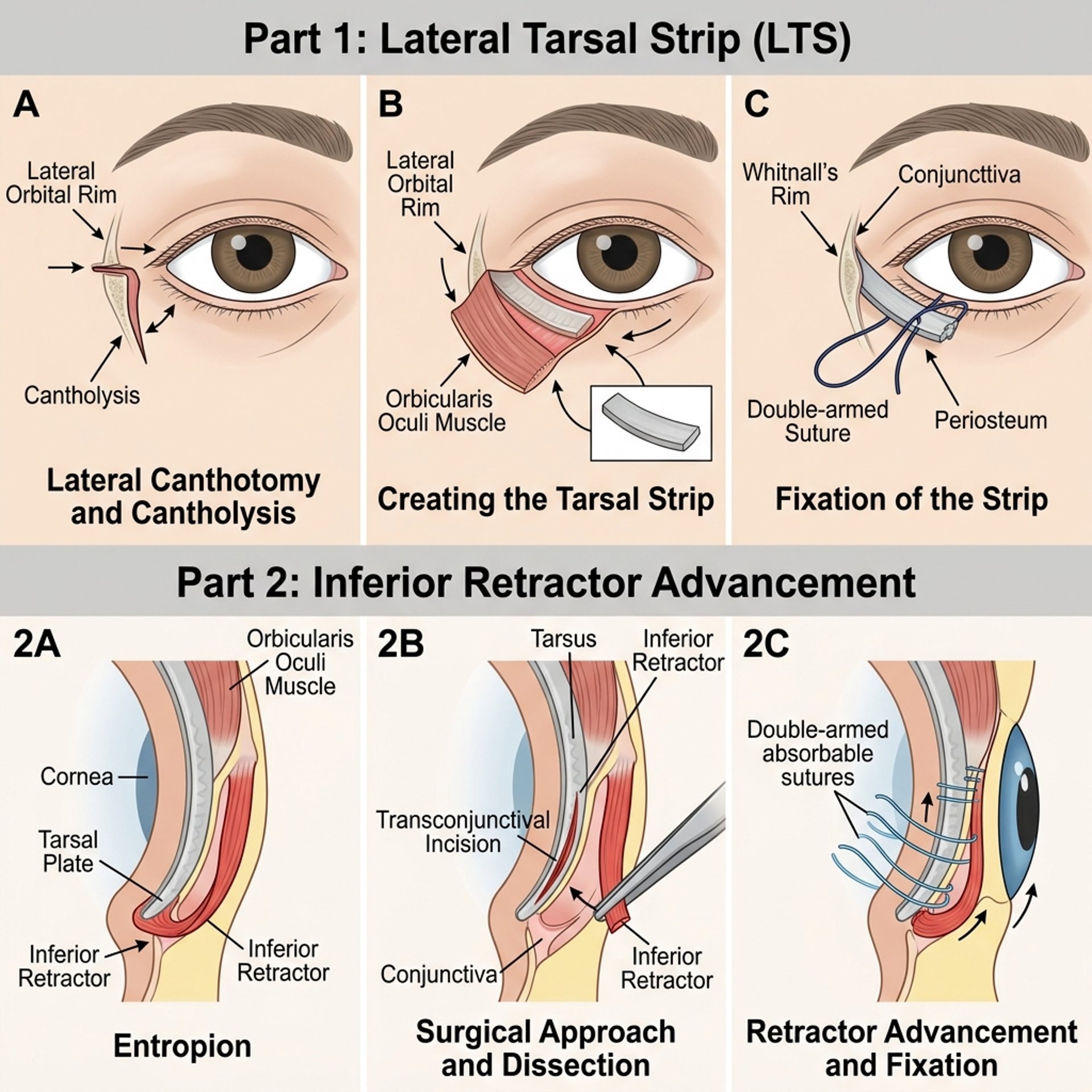
Entropion occurs when the eyelid, usually the lower lid, turns inward toward the eye. This causes the eyelashes and skin to rub against the surface of the eye, leading to irritation, redness, watering, and discomfort. In more severe cases, it can damage the cornea and affect vision.
Entropion is often related to age-related loosening of the eyelid tissues, although scarring or other eyelid conditions can also contribute.
Surgery is commonly used to reposition the eyelid so it rests properly against the eye again. This usually involves tightening and supporting the eyelid tissues
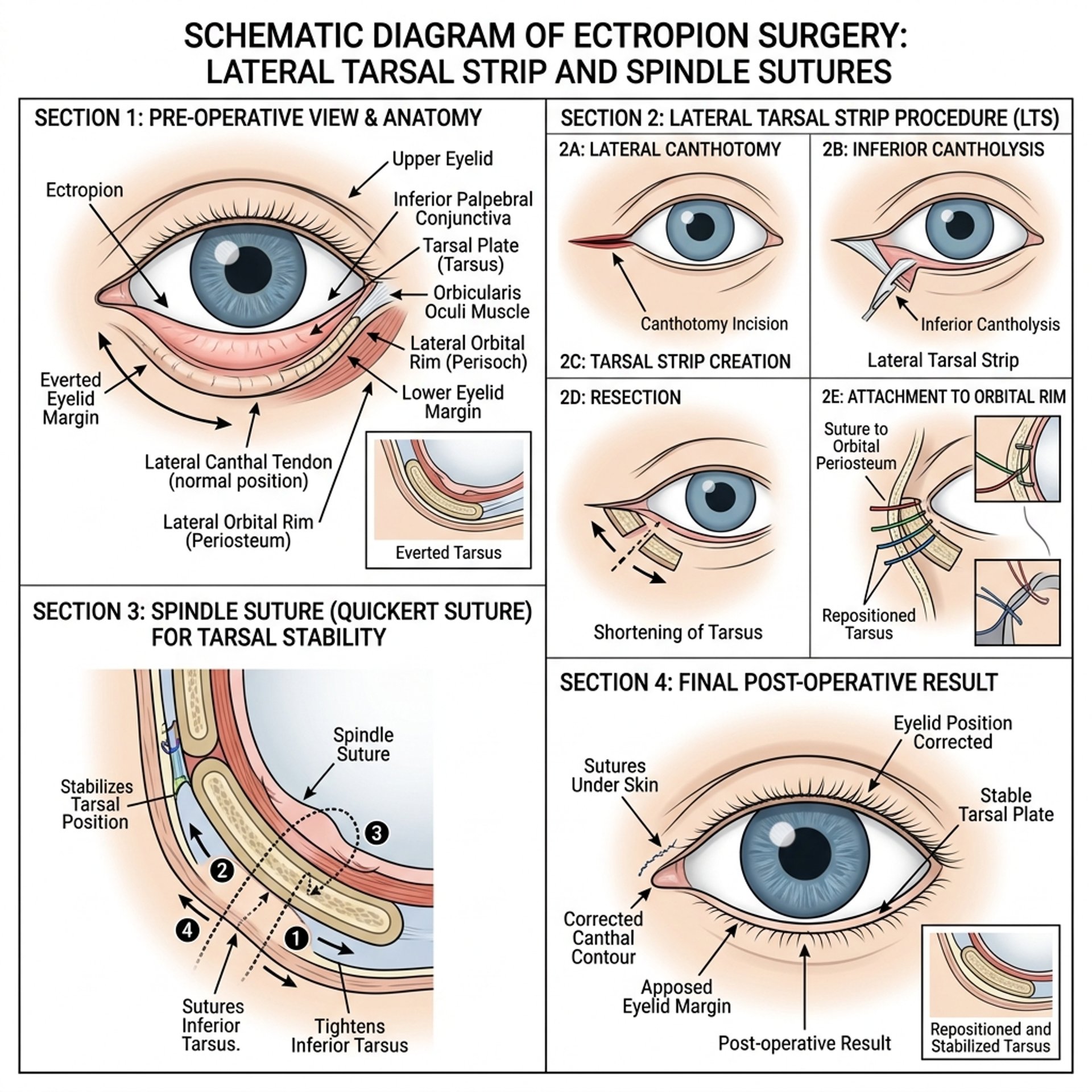
Ectropion is the opposite problem: the eyelid, again often the lower lid, turns outward and away from the eye. This prevents the eyelid from protecting the eye properly and can interfere with normal tear drainage. As a result, patients often notice tearing, dryness, redness, irritation, and sensitivity
Ectropion is commonly caused by age-related laxity of the eyelid tissues, although scarring, facial nerve weakness, or previous surgery may also play a role.
Surgery is usually performed to tighten and reposition the eyelid so it sits in its normal position and better protects the eye.
Eyelid Retraction from Thyroid Disease
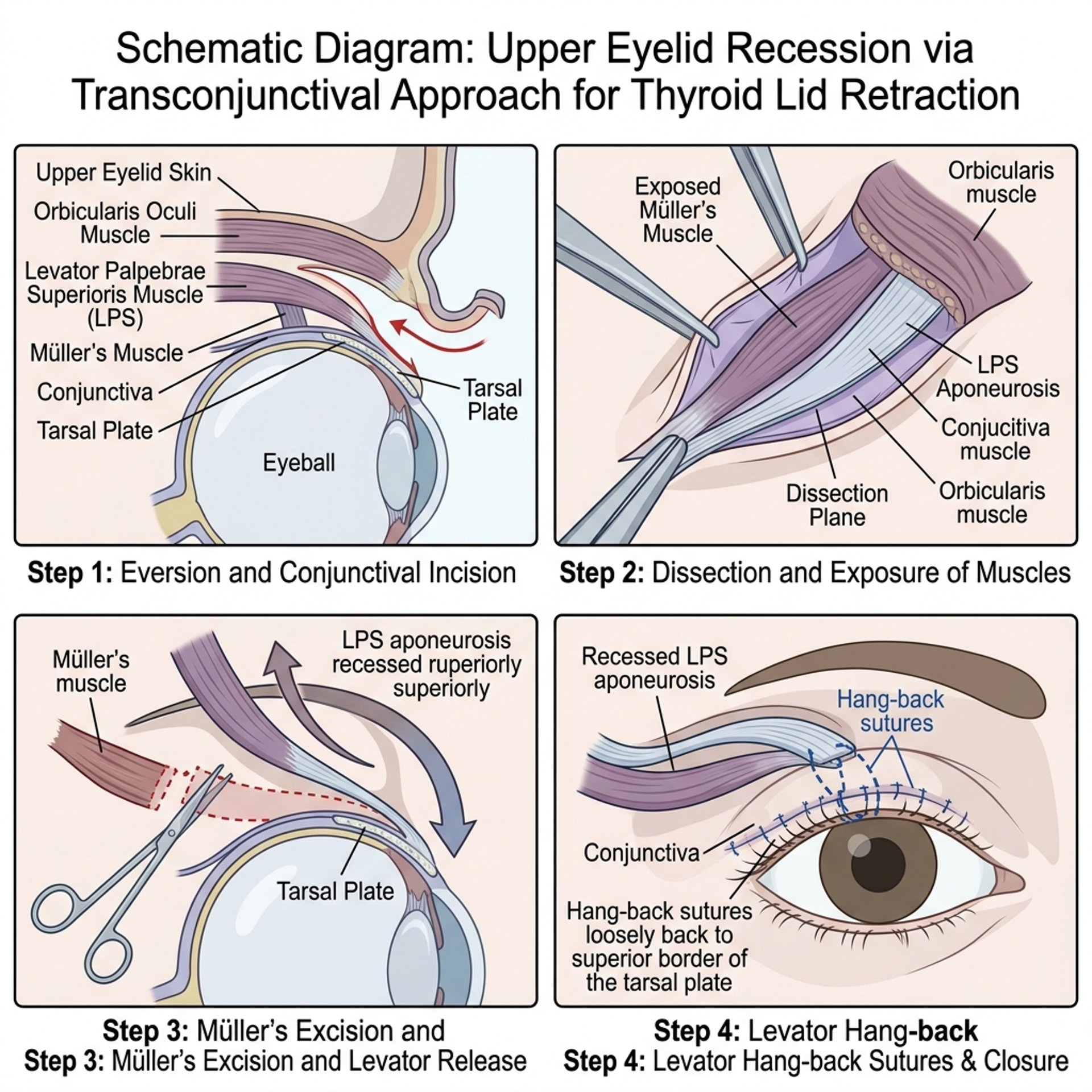
Thyroid eye disease can affect the tissues around the eyes and may cause the eyelids to pull back farther than normal. This is called eyelid retraction. The upper eyelid may sit too high, or the lower eyelid may sit too low, creating a staring appearance and leaving more of the eye exposed.
Because more of the eye is exposed, patients may develop dryness, irritation, tearing, light sensitivity, and discomfort. In more significant cases, exposure of the front of the eye can threaten vision.
Treatment depends on the severity and stage of the thyroid eye disease. When surgery is appropriate, the goal is to lower or reposition the eyelid to provide better coverage and improve both comfort and appearance.
Lowering the lid is usually done with iv sedation as an out patient . The recovery is about a week and the surgery is done from the inside the lid so there are no sutures from the outside. There is a 20 percent chance of requiring a second surgery to either further lower the lid or more commonly raise it up if it has fallen too far.