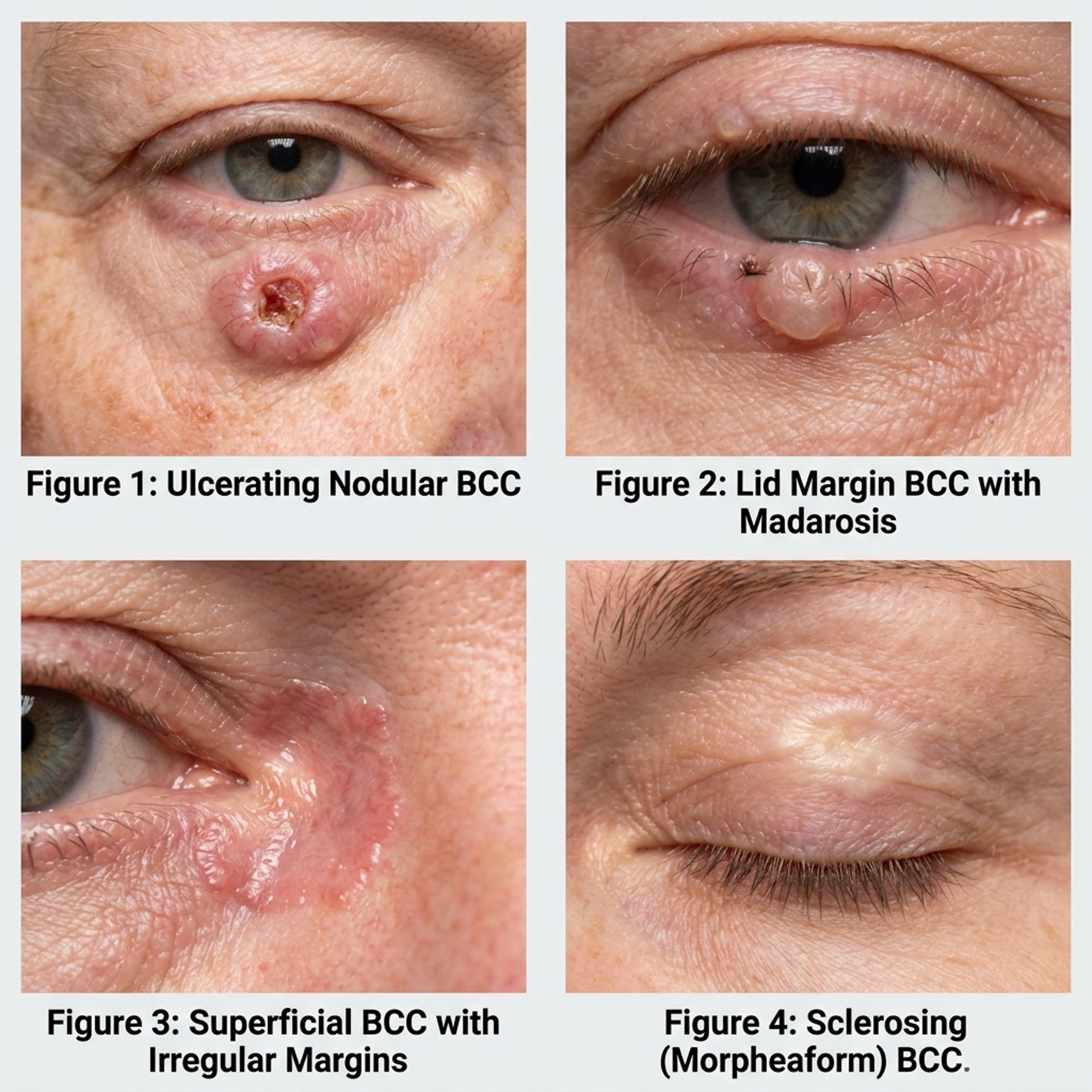
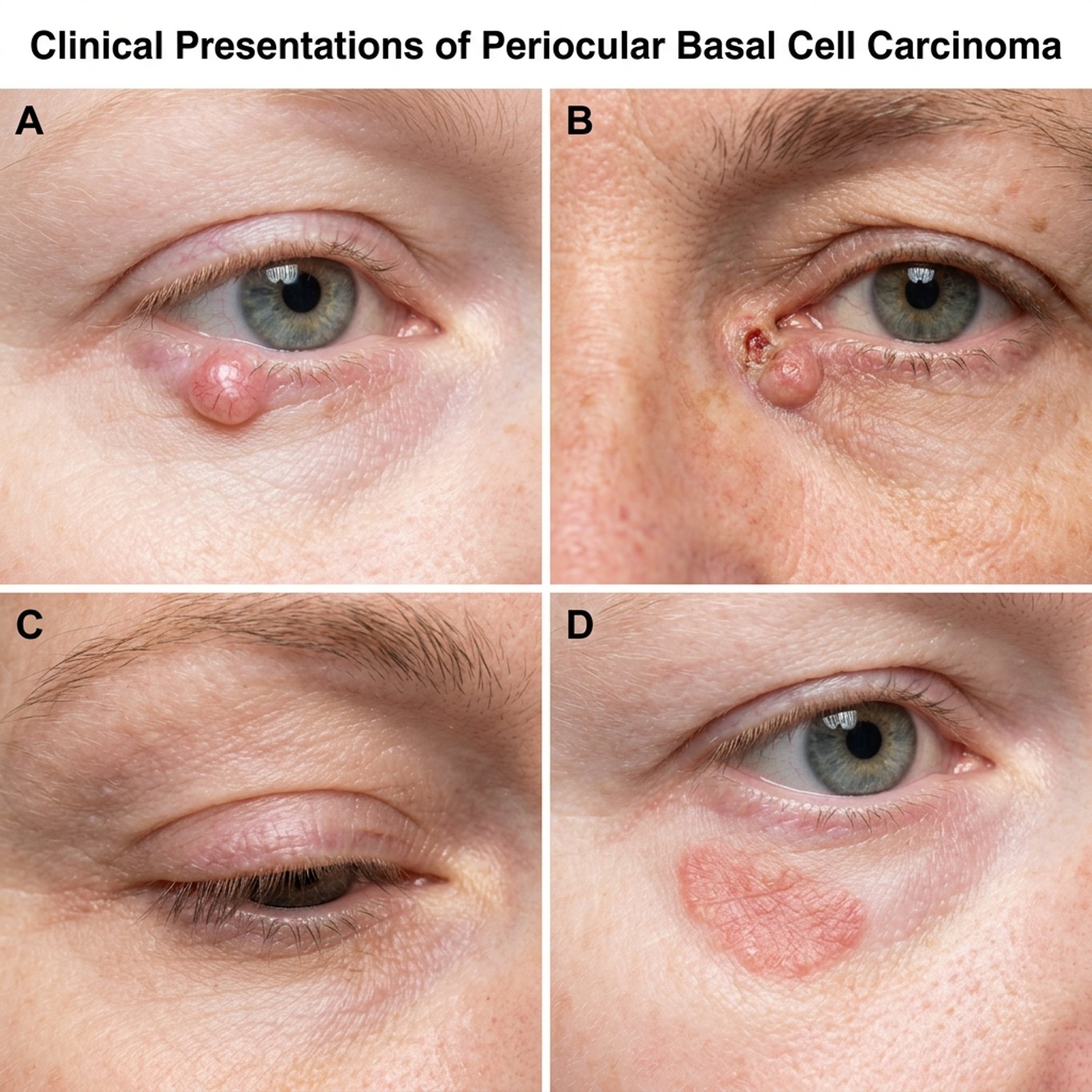
Eyelid skin cancers most commonly include basal cell carcinoma and squamous cell carcinoma. Basal cell carcinoma is the more common type and usually grows slowly, while squamous cell carcinoma is less common but can be more aggressive. These cancers often appear as a non-healing sore, a firm bump, or a crusted lesion on the eyelid skin.
Treatment depends on the size, location, and depth of the cancer. In selected superficial cases, topical prescription creams such as imiquimod or 5-fluorouracil may be used, but surgery is usually the most effective treatment for eyelid skin cancer.
The most common surgical treatment is removal of the cancer with careful checking of the edges, known as margin control. This may be done with Mohs surgery or with frozen-section guided excision. The goal is to remove all of the cancer while preserving as much healthy eyelid tissue as possible.
A “clear margin” means that no cancer cells are seen at the edge of the removed tissue. Clear margins are important because they reduce the chance of the cancer coming back.
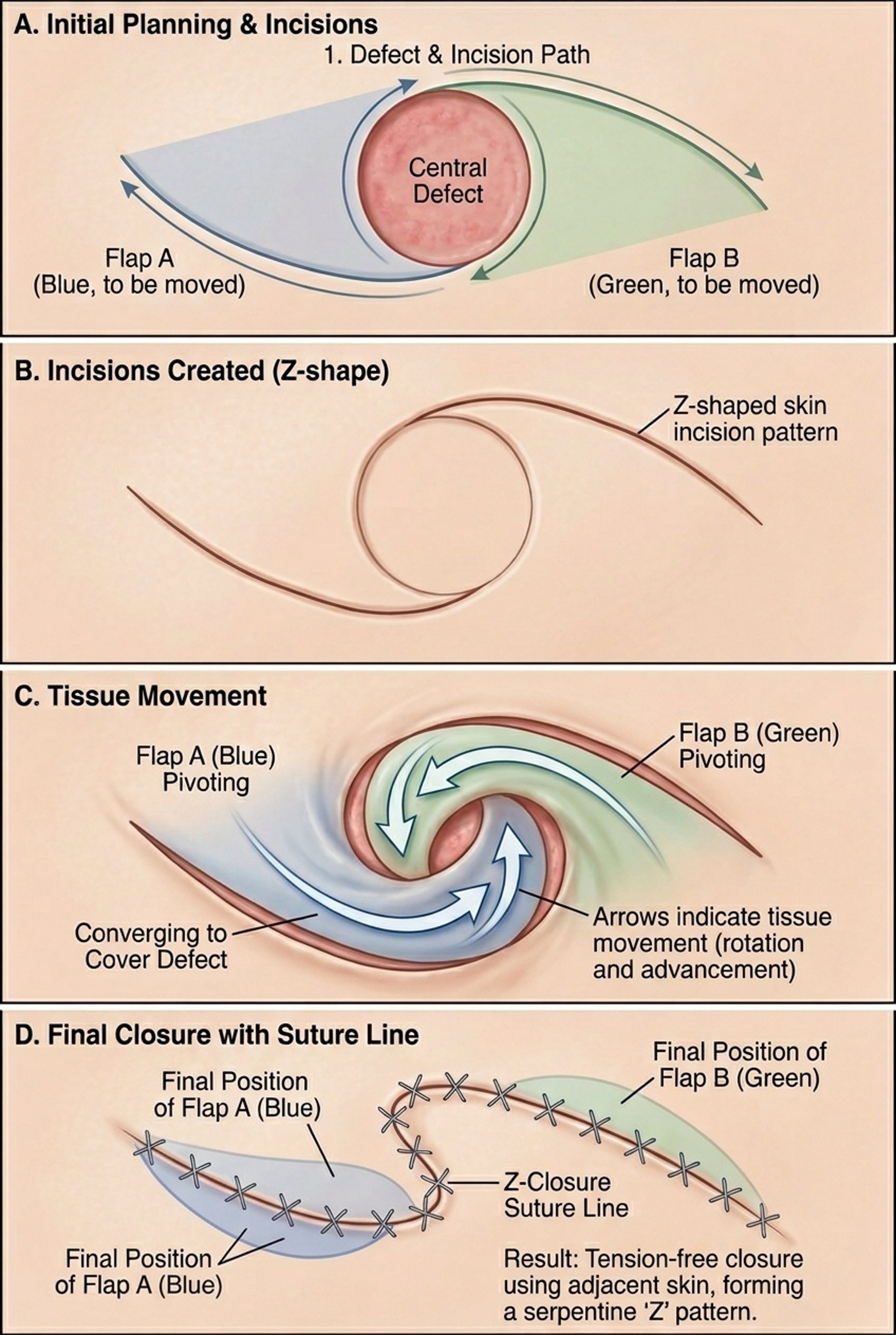
After the cancer is removed, the eyelid may need reconstruction. Reconstruction is the process of repairing the eyelid so it continues to protect the eye, blink normally, and look as natural as possible. Small defects may be closed directly, while larger defects may require skin grafts or local flap surgery.
Eyelid cancer treatment is best planned by a team experienced in both cancer removal and eyelid reconstruction.
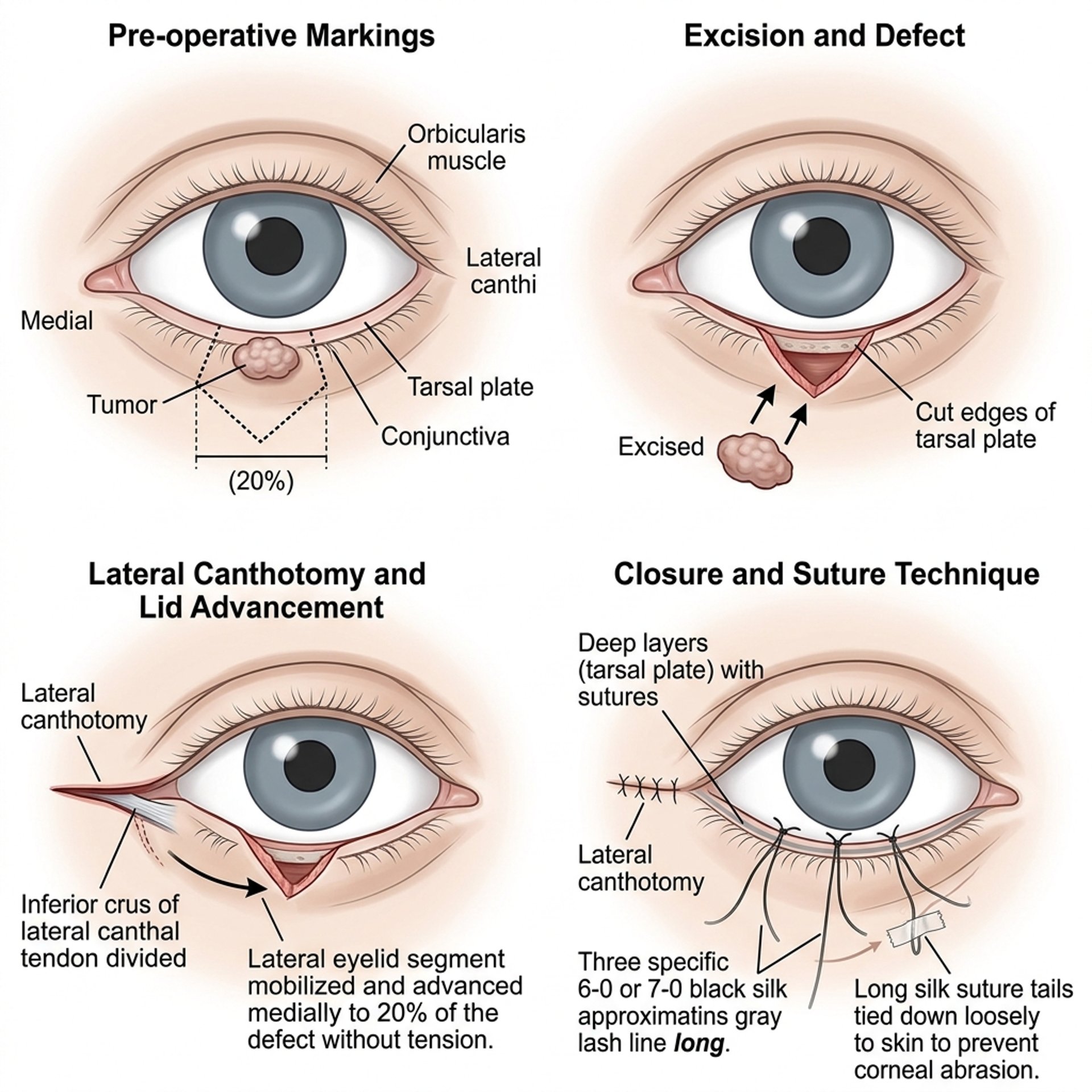
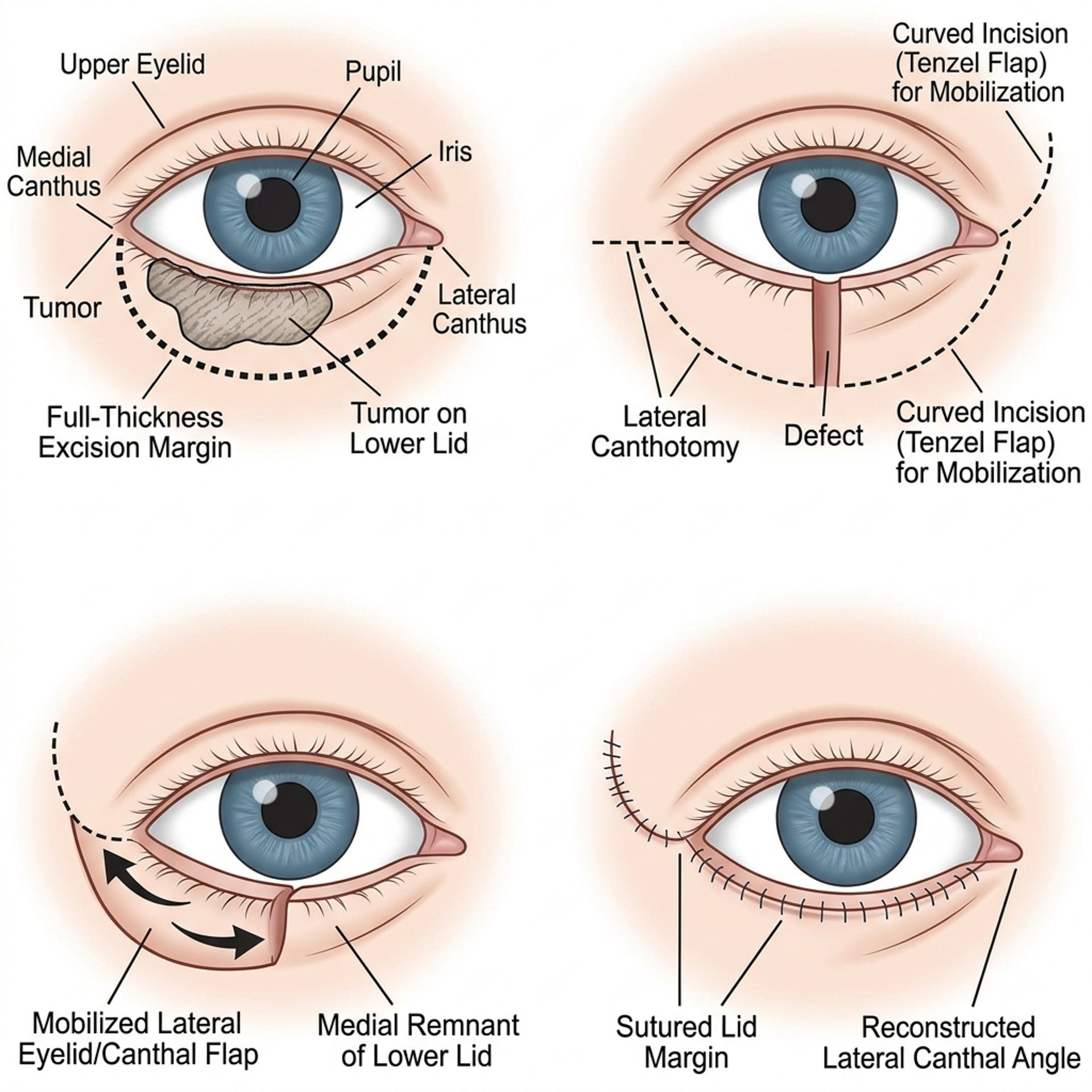
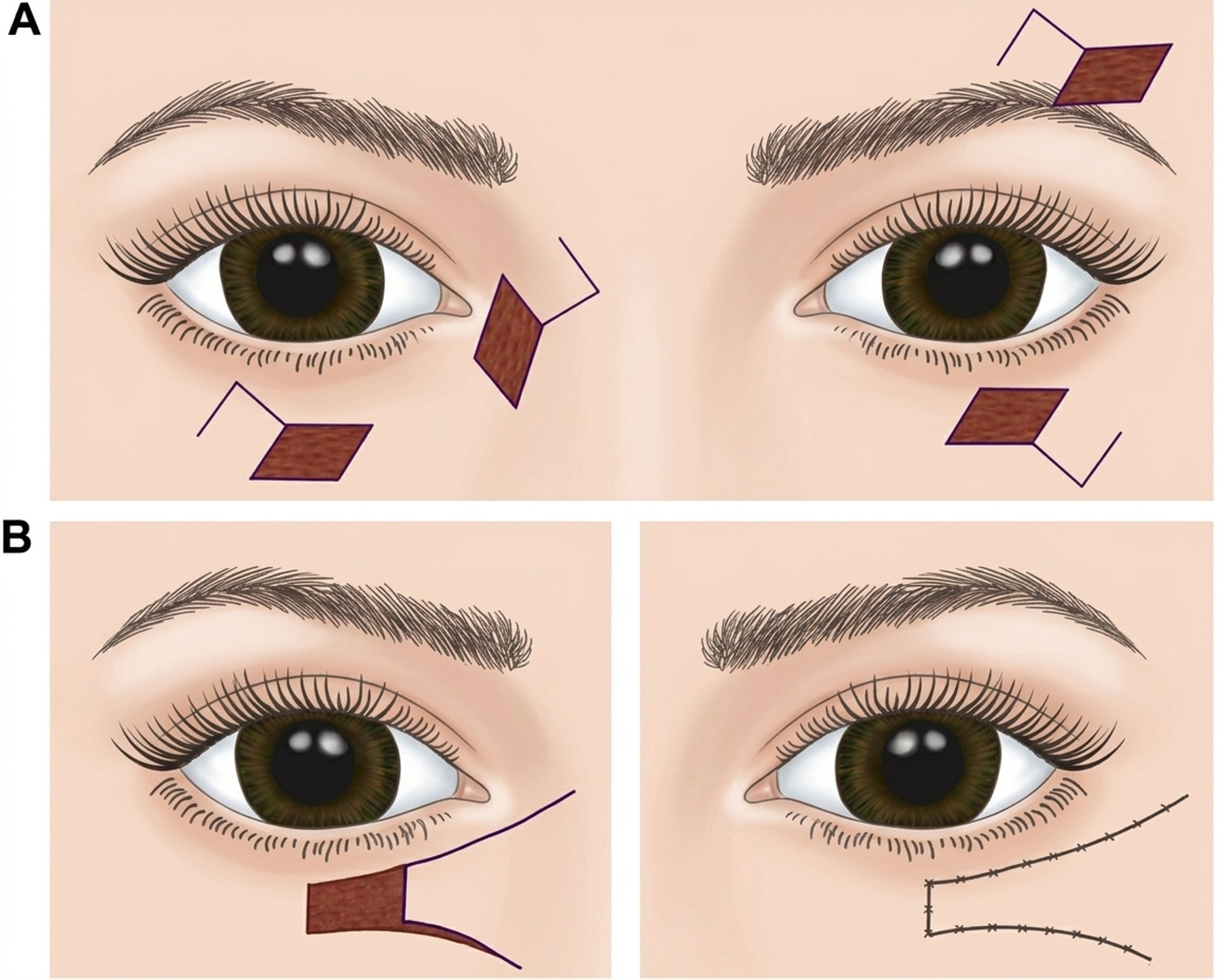
A few more examples of types of reconstructions